How to Use the Secondary Market on Maclear to Get More From Your P2P Portfolio
24.06.2026
7 min
Updated: 03.07.2026
In Europe, many investors still treat the Secondary Market as a back-up option. Somewhere to sell a position when something goes wrong, or a place to pick up whatever others have left.
That reading misses most of what the Secondary Market can do.
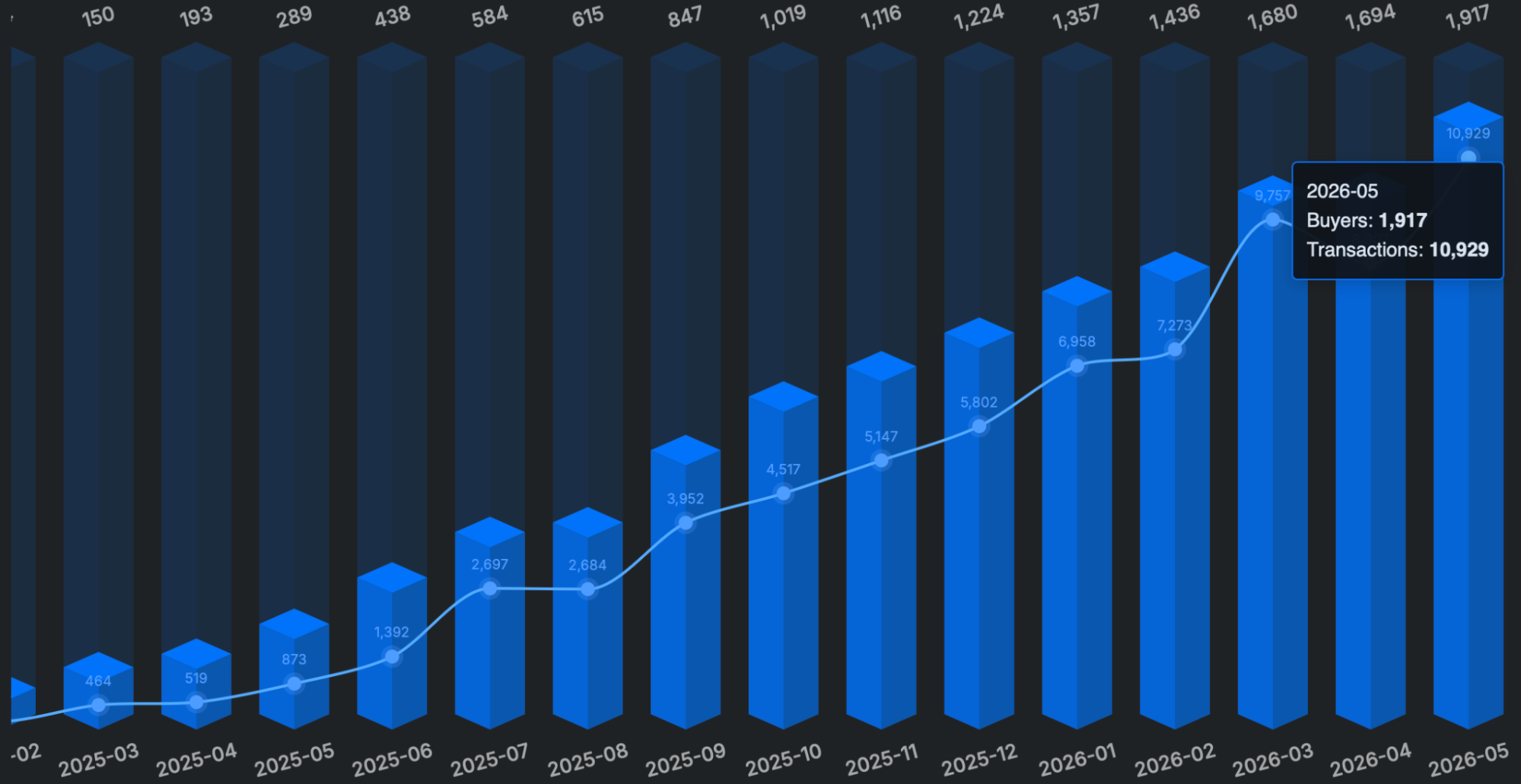
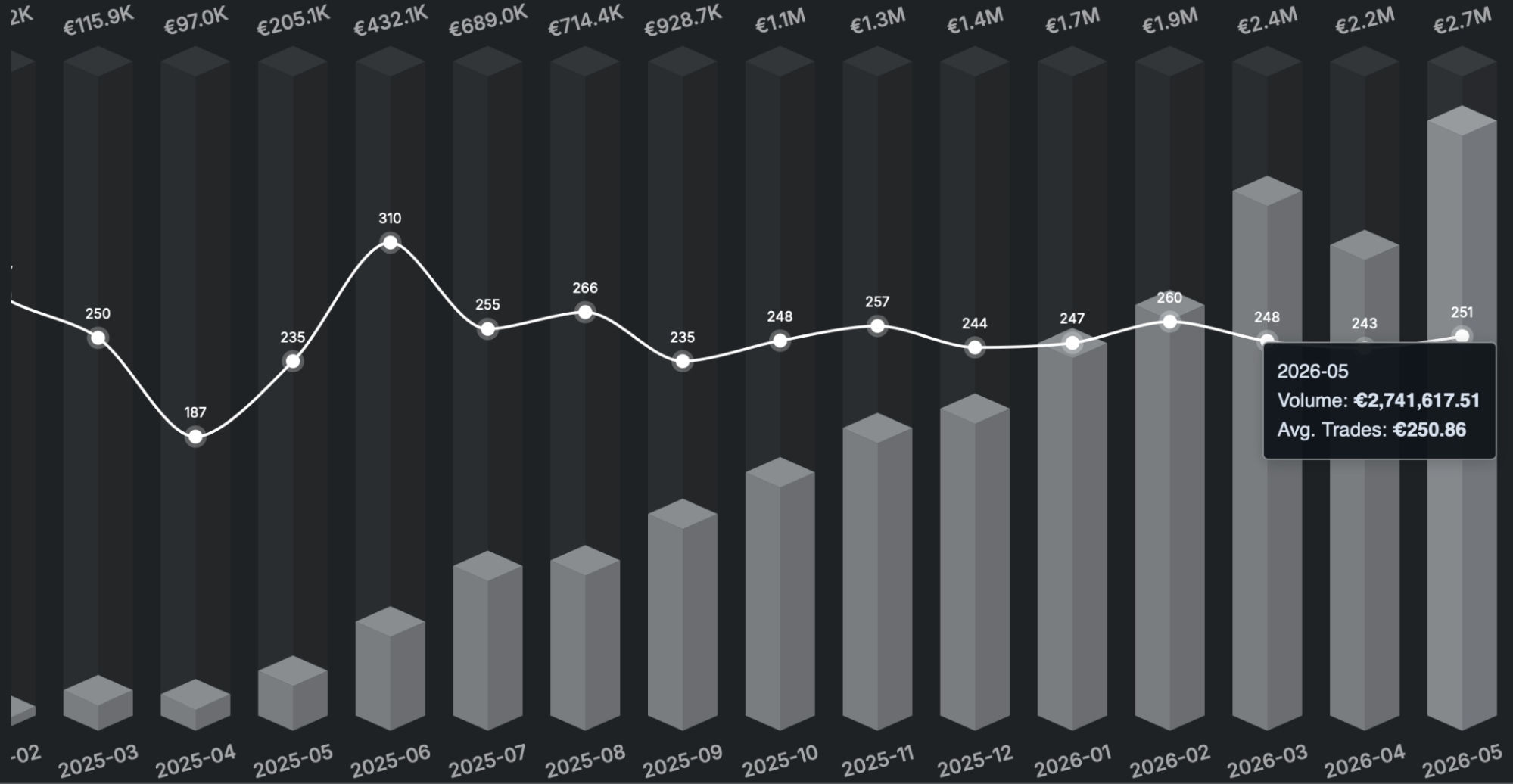
In May 2026 alone, 1,917 buyers completed 10,929 transactions on Maclear’s Secondary Market, with total monthly volume reaching €2.7M. The investors behind those numbers are using the SM to buy into proven projects at better prices, rotate capital faster, and manage their portfolios in ways the Primary Market alone doesn’t allow.
If you’re still on the fence, this article is for you. We cover how the Secondary Market works, what to look for before buying your first position, how active Maclear investors are building returns through it, and the specific strategies behind their approach.
In This Article
How the Secondary Market Works in P2P Lending
A secondary market in P2P lending lets investors buy and sell existing loan positions before the loan term ends. Sellers can exit early for liquidity, rebalancing, or to free capital for a new opportunity. Buyers acquire the remaining claim and its full repayment schedule.
On Maclear, sellers can list positions at face value or apply a discount of up to 50% of par. Buyers pay no fees. Sellers pay 2.5% only when a sale completes. If a listing expires after 14 days without a buyer, no fee is charged. The minimum transaction is as little as €30.
The Secondary Market has one perk that changes the whole picture: when you buy a position, you can review the borrower’s repayment history before committing a single euro. On the Primary Market, you fund a loan from day one — with no repayment track record. That gap between what a Primary Market investor knew then and what a Secondary Market buyer knows now is what makes investors using the Secondary Market more and more.
Secondary Markets Liquidity Is Becoming The New Norm in European P2P
Over the past decade, European P2P lending has grown into a recognizable asset class. Retail investors who once dismissed it as too risky or too opaque now treat it as a serious allocation — seasoned and first-time investors alike.
That maturity shows up in several places at once. Regulatory frameworks have strengthened across the EU, with platforms operating under clearer licensing requirements and investor protection standards. Borrower demand has held up, particularly among SMEs that still can’t access bank credit at reasonable terms, or at all. And investor expectations have risen accordingly: people who put money into P2P lending now expect more control over their capital, not just a higher yield.
The secondary market is where that expectation has landed. Established platforms across Europe have added the feature, and it has become the standard. If a platform doesn’t offer one, investors notice.
Maclear added the Secondary Market in 2024 and has developed it since. By May 2026, the numbers show how active investors adopted it: 10,929 transactions in a single month, and 1,917 buyers.
An average position size is €250 — with total monthly volume reaching €2.7M.
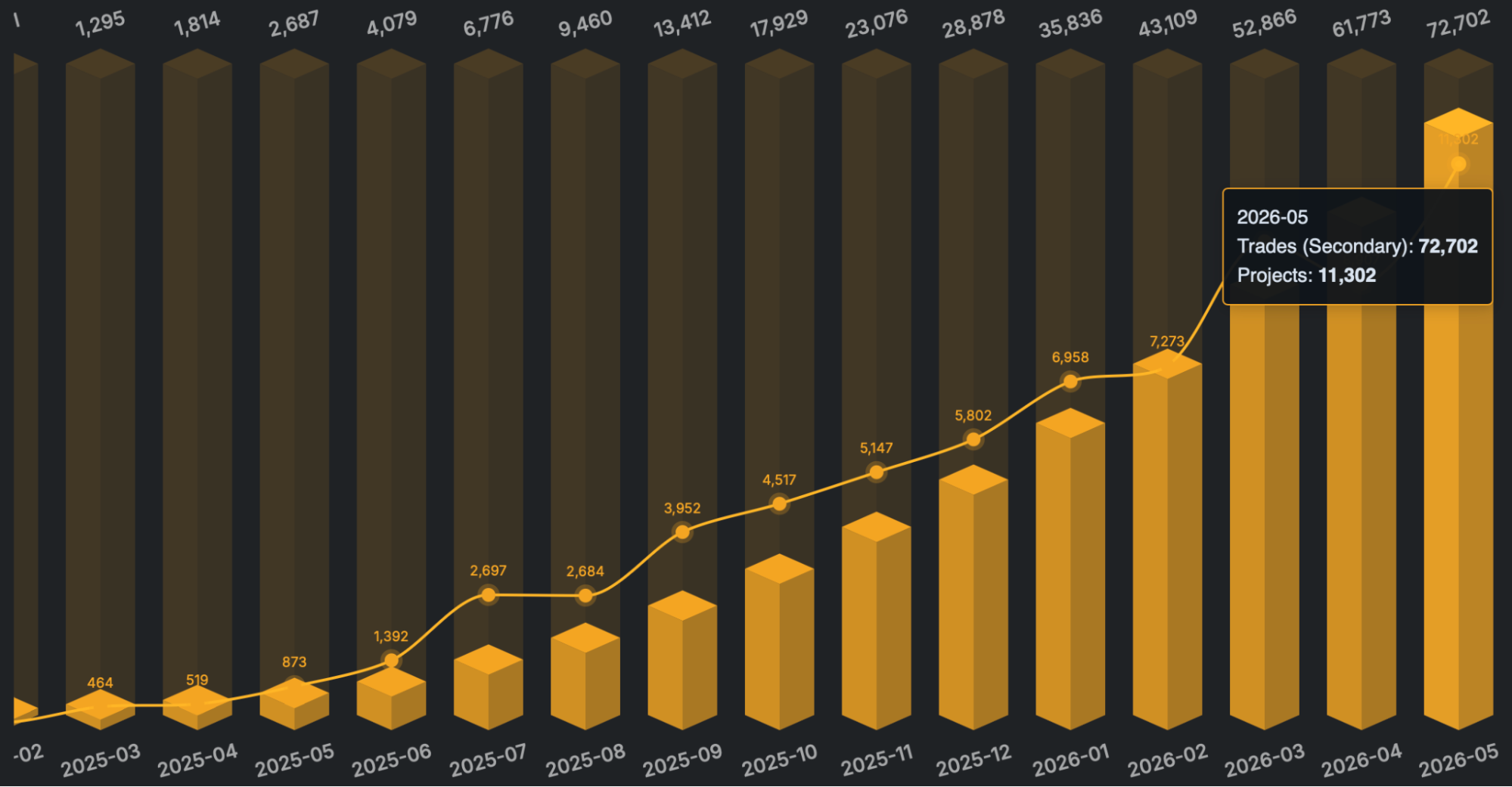
Since launch, that activity has accumulated into 72,702 deals on the platform.
The number that stands out most is this: every listing created between June 2025 and March 2026 found a buyer before the 14-day window expired — a 100% sell-through rate across ten consecutive monthly cohorts and over 50,000 listings. The median time to sell over that period was approximately three hours.
Primary Market and Secondary Market Serve Different Goals
On Maclear, the Primary Market is where positions begin: you fund a loan, earn interest at the project rate, and collect bonuses, referral rewards, and cashback. The Secondary Market is where you manage what you’ve already built — rotating capital, adjusting concentration, and buying into loans you didn’t originate.
Treating them as competing choices loses the point. They do different jobs. That difference creates a clear advantage for Secondary Market buyers: you come in after the loan has already started, which gives you two things a Primary Market investor didn’t have at the moment they funded the same position.
First, a lower entry price. When you buy below par, the interest rate on the loan stays fixed at the original level — the same rate as on the Primary Market. Your cost basis is lower, the interest income in absolute euros stays the same, and the return on what you actually put in goes up.
Second, a repayment history. By the time a loan reaches the Secondary Market, the borrower has already made payments. You can review that record before any money moves. It’s an observed behaviour rather than a projection.
These two advantages reinforce each other. You pay less for a position where the borrower has already shown they can service the debt.
Strategies for Getting More From the Secondary Market
The discount approach
This is the most direct approach: find positions listed below par and hold to maturity. On Maclear, top discounts currently run 2–3%, with around 1,480 listings available right now.
Here’s what that looks like in practice. Take a consumer loan, nominal €500, listed at €488. Base rate 15.5%, 8 months remaining. Interest income over those 8 months: €51.67. At maturity, you receive the full €500 nominal back on a €488 investment — recovering the €12 discount. Total return on €488 invested: €63.67 — an effective annual yield of approximately 19.6%. The €12 difference between purchase price and nominal is simply recovered at maturity — it's part of the repayment.
Factor in the repayment history — visible on every Secondary Market listing — and the strategy gets stronger.
The velocity approach
Not every Secondary Market purchase targets a price discount. Positions with 4–5 months left to maturity can be listed at minimal or no discount. The seller wants to exit before the loan closes; the buyer gets a position that returns capital in 4–5 months rather than 12–14.
When that capital comes back, you can use it for a new Primary Market project with a €30 for every €500 invested bonus. The more actively you cycle capital, the more compounding works in your favour.
Capital that would otherwise sit committed for over a year gets back into the cycle faster, with every new entry earning the full bonus again.
The loyalty approach
Loyalty bonuses on Maclear apply from the moment of purchase — based on the buyer’s tier. An investor with Alpha+ loyalty who buys a 14.5% base-rate position on the Secondary Market earns 17.5% from day one, with no need to wait for a new Primary Market entry.
For portfolios of €50,000 and above, where loyalty tiers are already high and deployment speed matters more than any single €30 bonus, the Secondary Market often becomes the faster way to put capital to work at an elevated rate.
These approaches are not mutually exclusive. An investor might buy a discounted 8-month position for the yield, collect interest while holding it, and once the 30-day post-purchase window passes, decide whether to hold to maturity or list it again if a better opportunity appears.
Who Benefits, Including Investors Just Starting Out
Secondary Market positions with short remaining terms are a practical entry point for investors new to Maclear or to P2P investing.
The exposure window is shorter. The repayment record is visible before any money moves. Returns arrive faster, letting a new investor experience a full cycle — funding, repayments, exit — without committing to a 14-month position upfront. That’s a good way to learn the mechanics.
The compounding effect extends across portfolio sizes. Faster capital cycles mean more reinvestment cycles per year. An investor rotating through short-term Secondary Market positions every 4–5 months versus holding 14-month Primary Market loans has more opportunities to put capital back to work and more chances to reinvest at the best available rate. Over time, that rhythm compounds into a different outcome than a static hold.
Secondary Market purchases also count toward total portfolio volume on Maclear, which affects loyalty tier calculations. Each SM purchase builds both return and tier standing at the same time.
Secondary Market Rules: June 2026 Update
Maclear updated the Secondary Market rules in June 2026.
Bonus positions can no longer be listed for sale. Investments received as bonuses — including the €30 per €500 invested, welcome and voucher bonuses — cannot be listed on the Secondary Market. This applies to the original bonus recipient and to any investor who purchased bonus positions on the SM afterward. The bonus funds aren’t blocked: they continue earning according to the project schedule and become withdrawable after maturity like any other funds. Bonus positions already listed at the time of the change remained active and could still sell.
Worth checking when browsing: a bonus position you see listed was listed before June 2026. If it’s still active and purchasable, buying it means you cannot relist it — the position stays with you until maturity.
To illustrate how this works: if you funded €500 into a project and received €30 as a bonus investment, the €30 bonus position cannot be listed on the Secondary Market. The €500 you invested can be.
Loyalty bonus applies per holder. Your loyalty rate applies to any position you hold, from the moment you hold it. When you sell, you earn interest at your rate up to the sale date. The buyer earns at their rate from that point. Neither party carries over the other’s level.
New investments carry a 14-day holding period before first listing. Regular investments can only be listed on the Secondary Market after 14 days from when the project reaches Funded status. For reference, this is shorter than the equivalent waiting periods on most major European P2P platforms.
The 30-day post-purchase lockup remains unchanged. After buying a position on the Secondary Market, you cannot relist it for 30 days.
Fees: A 2.5% seller fee applies only when a sale completes. If a listing expires after 14 days without a buyer, no fee is charged. Buyers pay no fees. Minimum transaction on the Secondary Market: €30.
How to Buy and Sell on Maclear’s Secondary Market
To buy: Open the Secondary Market section and browse active listings. Each listing shows the remaining loan term, the borrower’s repayment history, the asking price, and the projected AROI (Annualized Return on Investment). Purchasing transfers the claim to your My Investments section at the point of transaction.
To sell: Go to the Secondary Market section in your account. Select the investment you want to sell. Set the listing price — you can apply a discount of up to 50% of nominal value; the price cannot exceed the original investment amount. Check the GTC (Good ’Til Cancelled) box and confirm. The listing runs for 14 days. You can cancel at any time before a buyer purchases; if the listing expires without a sale, no fee is charged.
One thing to check before selling a large position: where your loyalty tier sits. Selling reduces your active portfolio volume. If a sale pulls you below your current tier threshold, the resulting drop in your loyalty rate may outweigh what you gain from the exit.
Instead of a Conclusion: The Secondary Market Doesn’t Replace the Primary Market. It Reinforces It.
The Primary Market is where you enter, earn bonuses, and build positions. The Secondary Market is where you manage what you’ve built — adjusting exposure, recycling capital, and buying into loans at prices and with borrower data that weren’t available when those loans were first funded.
Investors who understand both have a portfolio that earns and adapts at the same time — something a single-market approach can’t do.
The market is liquid, the numbers support it, and the strategies described here are available to anyone willing to look beyond the listing price.
All calculations and platform statistics are accurate as of the date of publication. Discounts, yields, and listing availability change daily. SM purchases may qualify toward loyalty tier volume; check current tier thresholds before large transactions. This article is for informational purposes and does not constitute investment advice.