Borrower Interview: Investstroy 3000 EOOD - From Small Renovations to €2.3M in Revenue
26.02.2026
5 min
Updated: 29.07.2026
At Maclear, we want investors not only to see a credit rating, but also to understand who is actually borrowing their money — the project on the other side of the platform you’re helping.
That’s why we try to share more details about borrowers themselves and their stories: real conversations with the people behind the loans listed on our platform. This is one of them.
In this interview, we spoke with founder and CEO Ognyan Georgiev Zdravkov.
In This Article
A quick look at the Investstroy 3000 EOOD borrowing project
Investstroy 3000 EOOD is a Sofia-based construction company specializing in residential and commercial renovation and construction projects, with a typical project size ranging from €5,000 to €100,000.
The company's financials tell a clear growth story: revenue grew from €712,755 in 2022 to €2,336,939 in 2024 — more than tripling in two years — with 2025 projected at €3,508,237.
Founded in 2021, Investstroy sought financing through Maclear to support cash-flow continuity on active construction sites and fund its own equipment base — reducing dependence on external subcontractors and gaining greater control over execution quality.
You started in 2021 — what was the plan from day one?
The image is taken from the project’s website
We founded the company in Sofia in 2021, when demand for renovation and construction services in the city was growing steadily. From the very beginning, we focused on small and medium-sized renovation projects, which was a conscious choice.
Such an approach gave us strong practical experience. We learned how operations actually work on site, and what it takes to deliver consistently.
Instead of chasing scale, we concentrated on getting the fundamentals right. And over time, clients started bringing us larger residential and commercial projects. The transition felt natural because we were already ready for it — we understood execution deeply before we thought of managing it at scale.
That foundation is also what brought us to Maclear.
What key steps drove your company’s growth, and what challenges did you face along the way?
Renovations are extremely practical work. You operate on a tight schedule, coordinate with subcontractors and material suppliers daily, and you very quickly see what works, what slows things down, and where costs can get out of control if you're not watching closely.
The shift came when we started taking on larger projects. Almost everything about how we operated had to change.
Large-scale construction requires substantial capital upfront — for materials, labour, specialized equipment — often long before the client makes a single payment. Timelines stretch out, you're coordinating across multiple sites simultaneously, and even one delayed delivery can hold up the entire project.
Managing cash flow while keeping continuous activity on site became our central challenge. I’d say that these are typical problems for construction businesses at this level, but knowing they're typical doesn't make them easier to solve. It required a completely different approach to planning — much closer attention to internal coordination, cost control, and capacity management.
What role did Maclear financing play in your growth?
Financing became especially important when we moved into longer-term projects with phased, milestone-based payments. The contracts were in place, the demand was clear, but the gap between when we needed to spend and when payments came in was a real operational challenge.
Construction doesn't pause while you wait for the next milestone. Once work is underway, the site needs to keep moving — materials, labour, equipment. If your cash flow can't support that continuity, you either slow down or take on unnecessary risk.
For us, turning to financing was a deliberate and practical decision. We used it as a tool to sustain operational performance: to keep sites running without interruption and to take on a significantly larger volume of work than our internal cash flow alone would have allowed.
The image is taken from the Maclear platfrom
What achievements matter most to you, and what was the turning point?
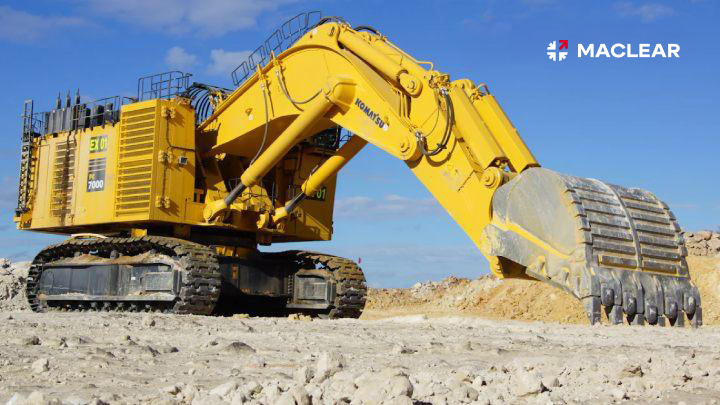
The most meaningful shift was the decision to invest in our own machinery and specialized tools. Before that, we relied on external subcontractors for specific equipment and highly technical tasks. That model worked for a while — but over time, it created dependencies we couldn't fully control.
With financing, we started building our own equipment base. And the difference was immediate. We reduced our reliance on outside parties, gained much greater flexibility in scheduling, and our cost control improved significantly. Deadlines became much easier to manage.
Also, we got along with planning well in advance — accepting larger and larger contracts with confidence, knowing the necessary resources are available.
What's next for Investstroy 3000 EOOD?
We’re looking ahead to controlled and disciplined expansion. The focus will be on larger, more predictable projects where clear schedules and structured payments allow for better planning and risk management.
Strengthening our internal capabilities remains a key priority. We'll continue investing in equipment, tools, and our teams. Every step we take to reduce dependence on external subcontractors gives us more control over execution quality, and that directly affects our margins and our reputation.
Investstroy 3000 EOOD has successfully completed its financing through Maclear. All borrowers undergo a structured due diligence process before being approved for listing. Publishing borrower interviews is part of how Maclear maintains transparency with its investor community — so that the people funding these loans can make informed decisions.