We constantly monitor community feedback, and we see that our unique structure — combining Swiss headquarters with Eastern European projects — often raises questions. And rightly so. In this article, we want to clarify the reasoning behind our strategy, explain our regulatory roadmap, and provide context for our financial decisions.
Maclear Business Model, Regulation and Transparency Facts
Dear Maclear Investors and Partners,
Over the past year, our platform has grown from an ambitious startup into a major player with a portfolio of over €60 million. Such rapid growth inevitably attracts attention, and we welcome this.
In recent days, detailed reviews of our activities have appeared online. I have studied them carefully. Although they contain some inaccuracies and interpretations caused by an "outside" view, I am grateful to the authors. They have highlighted questions that matter to our community.
As Co-Founder and Chief Financial Officer (CFO), I believe that there should be no "grey areas" in finance. Therefore, I decided not to limit myself to short comments. Instead, I am releasing this Transparency Report.
Here, I want to personally explain the logic behind our legal, financial, and operational decisions, based on facts.
Switzerland and Regulation
Swiss Legislation, PolyReg & ECSP
1. Maclear’s launch context
Maclear was launched as a project in 2022. At that time, pan-European crowdfunding regulation (ECSP) was in a transition phase and a de facto “regulatory gap” existed. The old frameworks were no longer fully applicable, while the new rules had not yet entered into force across many European jurisdictions.
2. The foundation of Swiss law
Under these conditions, we chose a jurisdiction that has historically represented a gold standard for asset protection. Our approach is not based solely on regulatory guidelines, but on the Swiss Code of Obligations (CO), which provides a strong legal foundation:
Account Segregation: We operate a segregated account structure. Uninvested client funds are held in a dedicated Client Funds Account that is physically separated from the platform’s operational accounts. This ensures that investor funds cannot be used for the platform’s own business activities.
Bankruptcy Protection: Under Art. 401 of the Swiss Code of Obligations, assets held by a company on behalf of clients, including loan claims, are excluded from the bankruptcy estate and must be returned to their rightful owners in full.
3. The role of PolyReg
In addition to federal legislation, Maclear is a member of the self-regulatory organization PolyReg, which has over 25 years of operating history. This membership provides ongoing oversight in the areas of anti-money laundering (AML) compliance and due diligence standards, both of which are essential for maintaining the platform’s legal integrity and reputational standing.
It is a common misconception that SRO PolyReg supervision is limited solely to checking the cleanliness of transactions (AML). However, the regulations of the organisation (which is under the supervision of the federal authority FINMA) imply a much deeper level of investor protection that operates preventively.
The SRO admission procedure acts as a rigorous filter, eliminating unscrupulous market players. Before commencing operational activities, Maclear underwent a multi-stage vetting process, which includes:
Financial Solvency Check: Audit of the company's commercial and financial circumstances.
Reputation Check: Guarantee of impeccable reputation (Good Standing) of all administrators and shareholders.
Competence Check: Proof that management possesses the necessary specialist knowledge to manage a financial intermediary.
It is important to note that this supervision is continuous, not one-off.
Every year, Maclear undergoes mandatory inspections and audits by the SRO to confirm compliance with these strict criteria. This ensures that the platform was not only reliable at the start but also strictly adheres to standards in its daily operations.
4. Why we did not transition to ECSP immediately
The European ECSP license offers a comparable level of investor protection, but through a more complex regulatory and operational framework.
Transitioning to ECSP in 2023 would have been bureaucratically excessive, as the Swiss legal model already ensured the core investor protection principles, including fund segregation and the protection of investor rights.
In addition, ECSP requires platforms to work with third-party payment service providers, such as Lemonway. This typically reduces operational flexibility and increases costs. Swiss law, by contrast, allows us to manage segregated client accounts directly, resulting in greater efficiency and lower structural overhead.
5. Audit and the road ahead
Swiss regulation does not require us to undergo mandatory audits. However, in response to requests from our investor community, we are implementing voluntary and regular audits.
With this step, we combine the strength of Swiss legal asset protection with enhanced financial transparency, aligning regulatory robustness with investor expectations.
Personal background and corporate structure
It is important to clearly explain the company’s structure and address a common question: Why is the office in Switzerland while the projects are located in Eastern Europe? The answer is straightforward and transparent.
The founders of Maclear are Swiss residents with Estonian roots. This naturally shaped the business structure. The first business relationships and borrowers were sourced from Estonia, a market the founders understand deeply due to their background and long-standing local expertise.
Notably, the majority of these initial borrowers have already successfully repaid the principal of their loans. They played a key role in launching the platform and, in practice, demonstrated the viability and sustainability of the business model.
Why are there no Swiss projects?
Questions about the geographic focus of projects are common among investors, and they are entirely reasonable. To understand this, it is important to look at how business financing works in different regions.
In Switzerland, the key interest rate is close to zero, making it one of the lowest-cost financing markets in the world. Stable local businesses can access bank loans at annual rates of approximately 1–3%. Under these conditions, it is economically inefficient for them to seek financing through P2P platforms at rates of 12–14%.
The situation in Eastern Europe is different. Bank loans are more expensive, and access to credit for small and medium-sized businesses is significantly more limited. At the same time, business margins in developing regions are often higher. As a result, local companies are willing to pay a premium for speed, flexibility, and access to capital.
Maclear’s model is built precisely on this market arbitrage. We attract capital from stable economies and allocate it to regions where capital is in short supply. This follows standard market logic.
For clarity: while we do not finance Swiss projects, we do have a strong base of Swiss investors. Their share is comparable to that of investors from Germany.
Team and operating costs
Locating our development and marketing teams in the Baltic states is a deliberate decision based on efficiency and trust.
First, the personal factor remains important. The core of our team consists of trusted professionals whom the founders have worked with for many years. This long-term cooperation allows us to maintain a high level of execution quality and ensure the security of all operational processes.
Second, this is a matter of rationality. The cost of employing IT specialists in Switzerland is multiple times higher than maintaining a distributed team across Europe and the globe. Relocating the entire operational function to Switzerland would significantly reduce margins and inevitably lead to lower returns for investors.
Our approach is to prioritize quality while maintaining reasonable costs. This enables us to offer investors a balanced and transparent risk–return profile.
Financial Reporting and Transparency
Company profitability
Some reviews point to the company’s loss in 2023 as a negative indicator. Here, it is important to consider the broader context. Maclear is in an active scaling phase. In fintech, profitability at this stage is often the exception rather than the norm and can indicate underinvestment in growth rather than operational strength.
The reported loss of CHF 118,379 was planned and fully controlled. These funds were reinvested into platform development, team expansion, and marketing activities. Our current priority is to build market share and strengthen the technological foundation of the platform, not to optimize for short-term accounting profit.
Publication of financial reports
We have been asked why the 2023 financial report was published with a delay. The answer lies in the evolution of our corporate culture and governance practices.
Maclear AG is a private company. Under Swiss law, we are not required to publish financial statements publicly, unlike listed public companies.
At the early stage, our primary focus was on operational performance, and public disclosure was not considered a priority. The 2023 report was prepared for internal use on time, as evidenced by the original file date of April 2024. The decision to make it public was taken later, in direct response to requests from a growing investor community.
We listened to our investors. Going forward, voluntary transparency will become a standard practice for Maclear.
2024 financial report
The delay in publishing the 2024 financial report is due to a large-scale technical migration. Over the past year, we completed a full transition of the platform’s backend to a new architecture designed to support a significantly higher volume of transactions.
To eliminate any risk of data inconsistencies during the migration, our finance team is currently performing final transaction verification manually. This is a deliberate control measure aimed at ensuring the accuracy and integrity of the reported figures.
We plan to publish the audited 2024 financial report within the next 2–3 months. Following that, and in line with our updated transparency approach, we intend to release the 2025 financial data one quarter later.
Portfolio Statistics
Real-time data availability
One of the claims in the recent review is that the platform “does not publish meaningful statistics.” This conclusion appears to be based on outdated information.
In the second half of 2025, Maclear implemented substantial updates to its transparency framework:
A dedicated Statistics page was launched, providing open access to the platform’s key metrics, including detailed data on projects and portfolio performance.
We introduced monthly Investor Updates (November example) where loan dynamics and portfolio trends are explained in a structured and investor-focused format.
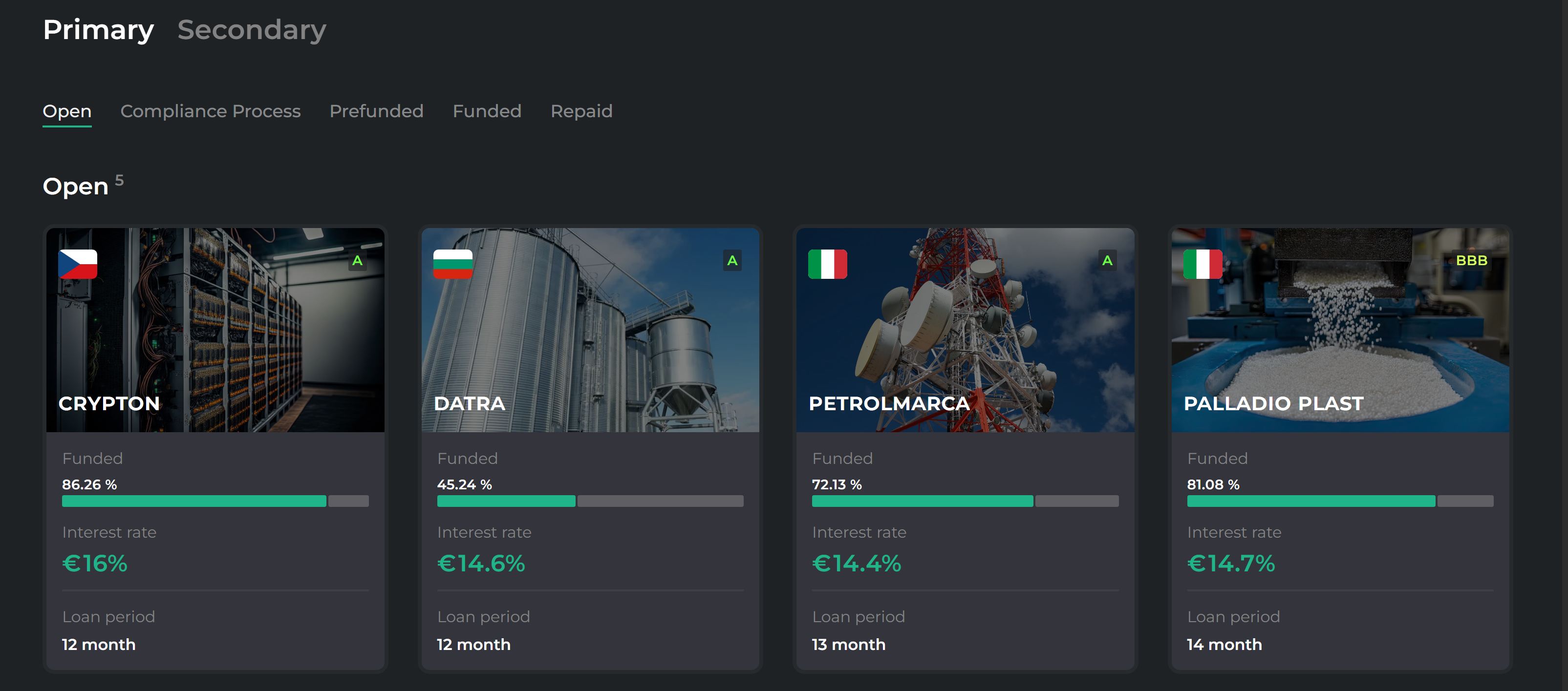
All projects on the platform are categorized and remain available for analysis across their entire lifecycle: Open, Compliance, Prefunded, Funded, Repaid. Historical data is not removed or altered retroactively.
Vibroedil case
Throughout Maclear’s history, there has been only one recorded default: the Italian company Vibroedil S.R.L.
This fact has never been concealed. The case has always been public, with a detailed breakdown published on our blog and communicated across all official channels, including Telegram and email. Since the beginning of the case, it has also been actively discussed within an online community of over 1,500 users, with regular and transparent responses from the platform’s management.
Despite the borrower’s bankruptcy, investors recovered 100% of the principal. This outcome was achieved through Maclear’s work on the settlement agreement and the presence of hard guarantees. Importantly, the Provision Fund was not used.
We view this case not as a reputational weakness, but as practical proof of the effectiveness of our risk model. Even in a borrower bankruptcy scenario, investor capital was protected and fully returned.
Marketing and Promotion Methods
Use of AI tools
Some reviews mention a high level of similar comments across social networks and blogs during the period from October to December 2025.
Here, we want to be fully transparent. Maclear follows a growth-hacking approach. In 2025, this includes testing experimental tools, such as AI-driven algorithms for brand awareness and automated content distribution. In the fourth quarter, we worked with several external agencies that used these tools to scale our media presence.
After reviewing the campaign results and the feedback from the community, including bloggers, we concluded that this approach is not appropriate for a conservative investment audience and may negatively affect reputation.
We value community trust more than reach metrics. As a result, the campaign was discontinued in early December, and our marketing strategy was adjusted. We have since shifted our focus toward organic influencer marketing and the active development of our investor referral program.
Borrower Assessment Methodology
Some reviews compare borrower data shown on the platform with information from public registries and point out differences in reported revenue, assets, and LTV figures.
We would like to clarify the methodological differences behind these numbers, so investors clearly understand how the figures presented in project profiles are calculated and why they may differ from registry data.
Collateral valuation and LTV
It is important to understand that public registries typically reflect the book value of assets. This value is often historical and may be reduced due to accounting depreciation, which means it does not necessarily represent the asset’s current economic value.
When calculating the Loan-to-Value (LTV) ratio, Maclear relies on an independent assessment of the collateral’s market value at the time the loan is issued. This approach is standard in credit risk management and is designed to reflect the realistic liquidation value of the collateral under current market conditions.
As a result, differences between registry data and platform figures do not indicate inconsistencies, but rather stem from the use of different valuation methodologies.
Revenue and project financing
The majority of projects on the platform fall under growth financing.
The figures investors see in project descriptions often include projected revenue, reflecting the performance the company expects to achieve as a result of the financing raised, for example after acquiring new equipment or expanding operations.
Comparing these forward-looking figures with last year’s tax filings, when the financed assets were not yet in place, is methodologically incorrect. Our assessment focuses on the future cash flow, as this is the source from which the loan will be serviced and repaid.
Labor market specifics and outsourcing
References to a small number of registered employees are often misinterpreted. For small and medium-sized businesses, especially in the construction and logistics sectors, working with subcontractors and outsourced teams is a common and standard practice.
From our perspective as a platform, the key factor is the borrower’s actual capacity to execute contracts. This includes valid agreements with subcontractors, access to equipment, and operational resources, rather than the formal headcount listed for a specific legal entity.
Summary
Our loan decisions are based on a comprehensive analysis that includes the market valuation of collateral, management reporting, and the borrower’s business plan. Public registries provide important but historical information, often with up to a one-year delay, and therefore do not always reflect the current potential or true value of a business’s assets.
Below is a quote from one of our investors, shared in the official community chat:
"As a developer, I used ESLAT as an example due to its relevance in demonstrating how assets are restructured, but preferring Maclear to defend its own projects instead. However, the other cases mentioned were quite staggering from a risk analysis perspective. We simply couldn't assess a company's repayment capacity without having financial accounts for the year where the loan was amortized. The Vibroedil case may serve as a clearer illustration of why superficial analysis cannot be trusted. The accusation that Maclear 'shared misleading information' highlighted that Denny didn’t even read the project fact sheet, unless he didn’t know how to distinguish between a closed balance sheet and a projection.
In conclusion, we are criticizing Maclear for communicating the insolvency later overlooking how professional debt recovery works. The situation was communicated in September (not October as stated by the blog), where they waited weeks to negotiate an 'amicable agreement' that allowed investors to recover their money through owners' personal funds.
In reality, liquidation takes 5-10 years and crowdlending investors are usually paid last due to bankruptcy proceedings in Italy. The fact that Maclear managed a full refund via personal funds in record time is not an 'irregularity', but shows risk management effectiveness. If a developer cannot even read that a figure is a projection when it's explicitly stated, how much weight can we assign to his other findings?"
Conclusion: Market and Diversification
To conclude, we want to highlight the most important point. The European crowdlending market is maturing. This is an emerging industry that is increasingly becoming a real alternative to traditional bank financing.
We believe that all platforms are important and have their place. The market is large and continues to grow, leaving room for different business models to coexist.
While some platforms focus on consumer loans with buyback guarantees, Maclear has chosen the path of collateral-backed business lending and the creation of risk mitigation mechanisms such as the Provision Fund. These models do not compete — they complement each other.
Our advice to investors:
- Do not become an “angel investor” or a fan of a single platform. Diversification is your most powerful tool.
- We always recommend distributing capital not only across different projects, but also across multiple platforms, countries, and, crucially, risk protection measures. The ideal portfolio balances approaches where some projects benefit from buyback protection, and others from solid collateral, for instance.
- Maclear positions itself as a tool for investors seeking returns above bank rates, supported by real business assets. We will continue to improve the platform, making it more transparent and user-friendly.
We understand that trust is earned over years, but it is tested during moments of turbulence.
I want to assure you: Maclear is in this market for the long term. We hear your criticism. We are fixing the shortcomings. And we continue to grow.
Thank you for being with us. If you have any questions after reading this, my team and I are always open to dialogue.
Sincerely,
Aleksandr Lang
CFO & Co-Founder, Maclear AG